Bifidobacterium Deficit in U.S. Infants Reflects a Growing Problem in Industrialized Countries
A major new study published in Nature Portfolio’s journal Communications Biology examined the gut microbiomes of more than 400 infants across the United States and uncovered an alarming trend: many babies are missing key strains of Bifidobacterium bacteria that historically dominated the infant gut microbiome. Researchers believe this widespread bifidobacterial deficit in the United States and increasingly across industrialized countries is contributing to rising chronic inflammatory conditions later in childhood such as allergies, eczema and asthma by driving prevalent dysbiosis.
Antibiotic use, lifestyle choices, and dietary habits have all fundamentally shifted the microbiome in industrialized society. In infants this shift can be detrimental as the microbiome plays a crucial role in immune development.
The study is designed as a long-term longitudinal project following infants from early infancy through childhood. While the current publication reports findings from the first months of life and health outcomes assessed at age two, researchers plan to continue monitoring participants for up to seven years to better understand how early microbiome disruption influences immune, metabolic, and allergic diseases later in childhood.
The study, called the “My Baby Biome” project, analyzed stool samples from infants between one and three months old. This stage of life is considered a critical window for immune development because the gut microbiome helps train the immune system during infancy and from this data they have identified two clusters that represent 76% of the cohort and are at higher risk for developing an adverse immunological outcome.
The study was comprised of, 273 vaginal births, 139 C-sections, 222 breastfed, 138 mixed-fed and 52 formula-fed infants. The study grouped infants by microbiome composition rather than by feeding type alone. Researchers identified three major microbiome clusters (C1, C2, and C3) and then examined how birth mode, feeding method, metabolites, and health outcomes differed across those groups.
Researchers found that approximately 24% of infants had almost no detectable Bifidobacterium at all. The problem was even more common in babies born by C-section, where approximately 35% lacked these beneficial bacteria.
For decades scientists have shown that Bifidobacterium species such as B. breve, B. infantis, and B. longum were foundational organisms in the infant gut. These microbes specialize in consuming human milk oligosaccharides, or HMOs, which are specialized sugars naturally present in breast milk. HMOs are not designed to feed the baby directly but instead they selectively nourish beneficial microbes that shape immune development and protect against harmful organisms.
The study found that when Bifidobacterium species were absent, other microbes moved into the HMO-feeding niche. Unfortunately, many of these replacement organisms were potentially pathogenic bacteria, including Clostridium perfringens and Klebsiella pneumoniae. These microbes are associated with inflammation, toxin production, and immune disruption.
Researchers identified three major microbiome patterns among the infants. The healthiest cluster, C1 contained high levels of Bifidobacterium, especially B. breve, and showed stronger metabolic activity related to HMO utilization. The least favorable cluster C3 was dominated by Firmicutes and Proteobacteria, had far lower Bifidobacterium levels and contained significantly higher amounts of antimicrobial resistance genes and virulence factors. The presence of Bifidobacterium a cornerstone infant microbes, is not guaranteed and it is likely that this problem will only worsen as key species, such as B. infantis, become less prevalent, which is a general trend in industrialized society. B. infantis, which predominates in the non-industrialized world was missing in 92% of infants. Although it has recently been suggested that postnatal environmental transfer of Bifidobacterium can be a dominant force for colonization in infants the scarcity of Bifidobacterium observed in this study is divergent. If postnatal horizontal transfer of Bifidobacterium is a common method of acquisition, it appears its occurrence at this critical age is greatly reduced in infants in the United States.
One of the most important findings involved metabolism inside the gut. To understand the impact of Bifidobacterium on infant gut metabolism, researchers quantified a panel of 79 metabolites in 109 breastfed infant fecal samples. In these samples, eight metabolites were significantly different among clusters, with C3 showing the largest metabolic shift. Infants with abundant Bifidobacterium produced higher levels of beneficial compounds such as indole-3-lactate and aromatic lactic acids, metabolites linked to immune regulation and healthy neurological development. In contrast, infants lacking Bifidobacterium showed altered bile acid metabolism and reduced thiamine production, critical metabolites for immune and cognitive development alongside a shift toward increased butyrate production driven by opportunistic Clostridium species. C3 also showed a skewed short-chain fatty acid profile and a pronounced enrichment of Firmicutes and Proteobacteria with Clostridium perfringens emerging as the most abundant species. Notably, C3 is defined by a near-complete depletion of Bifidobacterium (particularly B. longum and B. breve). This group comprises nearly 40% of infants in the study. C. perfringens is also noted to have HMO-utilization capacity, suggesting niche competition in the absence of dominant Bifidobacterium species. Overall, this pattern suggests that loss of key Bifidobacterium strains reshapes metabolic function in the infant gut, allowing potential pathogens to occupy the HMO-utilization niche by shifting metabolic profiles. This also suggests a complementary role for Bifidobacterium in the infant gut and that having the proper set of Bifidobacterium in the HMO utilization niche suppresses pathogenic species and positively shifts metabolism in the infant gut.
The researchers also discovered that not all Bifidobacterium species perform the same functions. B. breve appeared especially protective. Infants carrying B. breve had a significantly lower risk of developing atopic conditions such as allergies and eczema by age two. The presence of B. breve was associated with nearly a fivefold reduction in risk for adverse immune outcomes.
The study also challenges some assumptions about breastfeeding alone. While breastfeeding generally supported higher Bifidobacterium levels in vaginally born infants, researchers observed the opposite trend in many C-section infants. In those babies, breastfeeding sometimes encouraged colonization by competing HMO-consuming bacteria such as Clostridium perfringens rather than beneficial Bifidobacterium. Some researchers believe this may partly reflect altered microbial exposure associated with C-section delivery and hospital environments, where infants are more likely to acquire opportunistic organisms such as Clostridium perfringens instead of maternal gut-associated microbes. This suggests that exposure to the right microbes early in life is just as important as breastfeeding or providing HMOs themselves.
The most concerning aspect of the study was the connection between microbiome composition and long-term health outcomes. Follow-up surveys at age two revealed that infants in the disrupted microbiome groups were roughly three times more likely to develop eczema, allergies, or asthma compared with infants whose microbiomes were rich in Bifidobacterium. Researchers expect further health impacts will become apparent as the cohort ages.
These findings are fueling interest in microbiome restoration strategies during infancy. Scientists are increasingly investigating ways to reintroduce missing infant-associated Bifidobacterium species, particularly strains adapted to metabolize human milk oligosaccharides (HMOs). The goal is not simply adding random probiotics, but rebuilding the specialized ecosystem that traditionally developed in early human life.
While this study was not a direct comparison between breast fed vs. formula fed the C1 cluster was;
Dominated by Bifidobacterium breve
Considered the healthiest or most “traditional” infant microbiome profile
Strong HMO utilization
Higher beneficial metabolites
Lower abundance of potential pathogens
Lower later risk of eczema/allergies
The researchers concluded that the widespread loss of infant Bifidobacterium represents a true form of prevalent gut dysbiosis in modern industrialized societies. If confirmed by future studies, restoring these foundational microbes could become one of the most important strategies for improving immune development and reducing chronic inflammatory disease risk in children.
HMO Prebiotic Discovery Timeline
1954: The first HMO, lacto-N-fucopentaose I (LNFP I), is discovered by German researcher Karl Meyer.
1980s: More HMOs are identified by different researchers, including lacto-N-difucohexaose I (LDFH I), lacto-N-tetraose (LNT), and 2’-fucosyllactose (2’-FL).
1990s: Researchers begin to study the potential health benefits of HMOs, including their ability to prevent the attachment of harmful bacteria in the gut.
2000s: Advances in technology, including mass spectrometry and gene sequencing, make it easier to study and produce HMOs in large quantities.
2015: The first commercially available HMO, 2’-fucosyllactose (2’-FL), is launched by the company Jennewein Biotechnologie.
2016: The Human Milk Oligosaccharides for Health and Development (HMO4HD) consortium is established to further study the potential benefits of HMOs.
2018: Nestlé launches an infant formula containing two HMOs, 2’-fucosyllactose (2’-FL) and lacto-N-neotetraose (LNnT).
2020: The European Food Safety Authority (EFSA) approves the use of HMOs, specifically 2’-fucosyllactose (2’-FL), in infant formula.
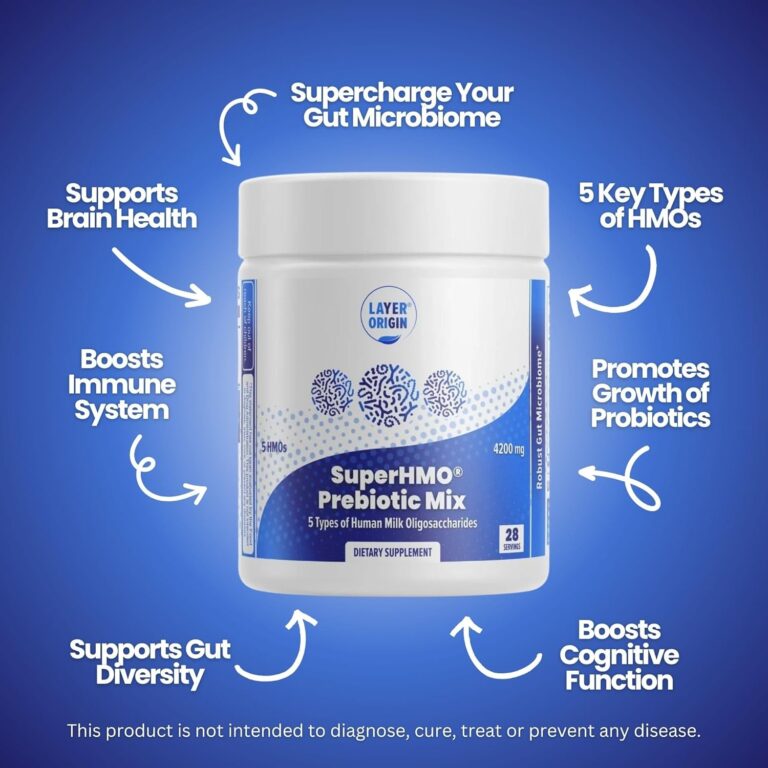
2021: US-based nutrition start-up Layer Origin Nutrition has launched seven supplements containing human milk oligosaccharides (HMOs) for both adults and children.
NEW HMO Prebiotics
Bovine colostrum, probiotics, yogurt, kefir and whole fat mammal milk offer superior support to combat dysbiosis. New research on human milk sugars, Human Milk Oligosaccharides (HMO’s) help us understand how these “prebiotics” support a healthy gut and strong immunity, starting from birth. Over 200 HMO’s have been discovered so far.
HMO supplements not derived from human breast milk have recently been developed.
Key takeaways:
While claims supporting postnatal environmental transfer of key bifido species, the divergent finding in the US in this study may reflect generational effects of formula feeding, poor microbiota diversity, greater antibiotic use, lack of maternal bifido species for transfer. It has already been shown that microbial composition in vaginal bacteria in women who use birth control and were also formula fed differs from healthy populations. It may also reflect use of pesticides affecting soil eco systems and thereby reducing beneficial microbes. Bifido bacteria are strict anaerobes (sensitive to oxygen) their ability to thrive depends heavily on the specific strain.

Immune For Life
Forgotten factors for life and health that are shaping the future of drugs and food.
Journey to a healthier lifestyle

Immune For Life
M. Ferrari
After decades of chronic health conditions and serious gut issues like IBS and SIBO, immune deficiencies and an autoimmune condition discover how I recovered my health thanks to natural oral immune therapeutics (maf and gcmaf). Due to a premature birth and being formula fed, I was a SAM child in real life. My book is a step by step journey you won't want to miss that illustrates how to regain or maintain health for all ages.