The Missing Probiotic Your Gut Was Designed For
Human milk is widely recognized as the first functional food encountered in human life due to its rich composition of nutrients and bioactive compounds. Among these, human milk oligosaccharides (HMOs) stand out as one of the most biologically significant components. HMOs are complex carbohydrates that play a critical role in shaping early immune development, gut microbiota, and overall health outcomes. Their multifunctional properties explain many of the long-term protective effects associated with breastfeeding.
HMOs are the third most abundant solid component in human milk, following lactose and lipids, with concentrations typically ranging from 5 to 15 grams per liter in mature milk and even higher in colostrum. These molecules are structurally complex, composed of five primary monosaccharides—glucose, galactose, N-acetylglucosamine, fucose, and sialic acid—which combine in numerous ways to create over 100 distinct HMO structures. This structural diversity allows HMOs to perform a wide range of biological functions making them far more than simple carbohydrates.
One of the defining features of HMOs is that they are not digested by the host. Instead, they pass through the upper gastrointestinal tract intact and reach the colon, where they serve as selective substrates for beneficial gut bacteria. This characteristic places HMOs in the category of prebiotics. By promoting the growth of specific microbial populations—particularly Bifidobacterium species—HMOs help establish a first stage healthy gut microbiome. In breastfed infants, these bacteria can make up as much as 50–90% of the gut microbiota, a dominance mostly attributed to the presence of HMOs.
Beyond their prebiotic role, HMOs contribute to immune defense. They act as decoy receptors, preventing pathogens from binding to intestinal cells, thereby reducing the risk of infections. Additionally, HMOs influence immune cell activity, modulate inflammatory responses, and support the maturation of the intestinal barrier. These combined effects help explain why breastfed infants have lower risks of gastrointestinal infections, allergies, and chronic diseases later in life.
Another important aspect of HMOs is their systemic impact. Although only a small fraction—approximately 1%—is absorbed into circulation, this amount is sufficient to interact with immune cells throughout the body. This suggests that HMOs may influence not only gut health but also broader immune and metabolic pathways. Emerging research also points to potential roles in cognitive development and neurological function.
The composition of HMOs varies widely among individuals and is influenced by factors such as genetics, stage of lactation, and environmental conditions.
HMOs are essential for establishing a balanced gut microbiota, strengthening the intestinal barrier, and guiding immune system development. Their ability to selectively nourish beneficial bacteria while inhibiting pathogens makes them uniquely effective as compared to other prebiotics.
Application to Adults: The Role of HMO Supplementation
Although HMOs are naturally associated with infant nutrition, their biological functions are not limited to early life. The same mechanisms that benefit infants—modulation of the gut microbiome, immune regulation, and anti-inflammatory activity—are highly relevant to adult health as well.
In adults, gut dysbiosis is increasingly linked to conditions such as metabolic disorders, autoimmune diseases, and chronic inflammation. HMO supplementation offers a targeted way to reshape the microbiome by selectively feeding beneficial bacteria like Bifidobacteria, which are often depleted in modern adult populations. Unlike generic prebiotics, HMOs provide a more precise ecological signal potential leading to more predictable and beneficial microbial shifts.
HMOs help strengthen the intestinal barrier and reduce low-grade inflammation, which is a primary driver of many chronic diseases. Their ability to act as decoy receptors support immune resilience.
Most importantly HMOs represent a bridge between early-life programming and adult health. By reintroducing these significant mammalian molecules into the adult diet, supplementation may help restore aspects of immune tolerance and microbial balance that were originally established during infancy but later disrupted or never established at all.
In this regard, HMO supplements are not simply another prebiotic—they are a biologically recognized tool with the potential to rebuild foundational aspects of gut and immune function, extending the benefits of human milk far beyond infancy.
Bovine Colostrum Oligosaccharides (a milk product)
Bovine colostrum DOES contain oligosaccharides, and in higher amounts than regular cow’s milk. Some of these are:
Structurally similar to HMOs
Built from similar sugar units (like sialic acid and fucose)
Capable of acting as prebiotics and immune modulators
There are differences:
The diversity is much lower than in human milk
The specific structures are different, meaning they don’t interact with the human microbiome in exactly the same way
Bovine oligosaccharides tend to be more sialylated and less fucosylated than human HMOs
Bovine colostrum oligosaccharides can still:
Support beneficial bacteria growth
Help protect the gut lining
Provide anti-inflammatory and antimicrobial effects
Both HMO supplements and bovine colostrum are beneficial for adult gut health—but HMOs tend to be more targeted, while bovine colostrum is more broad-spectrum (immune factors, growth factors, peptides + some oligosaccharides).
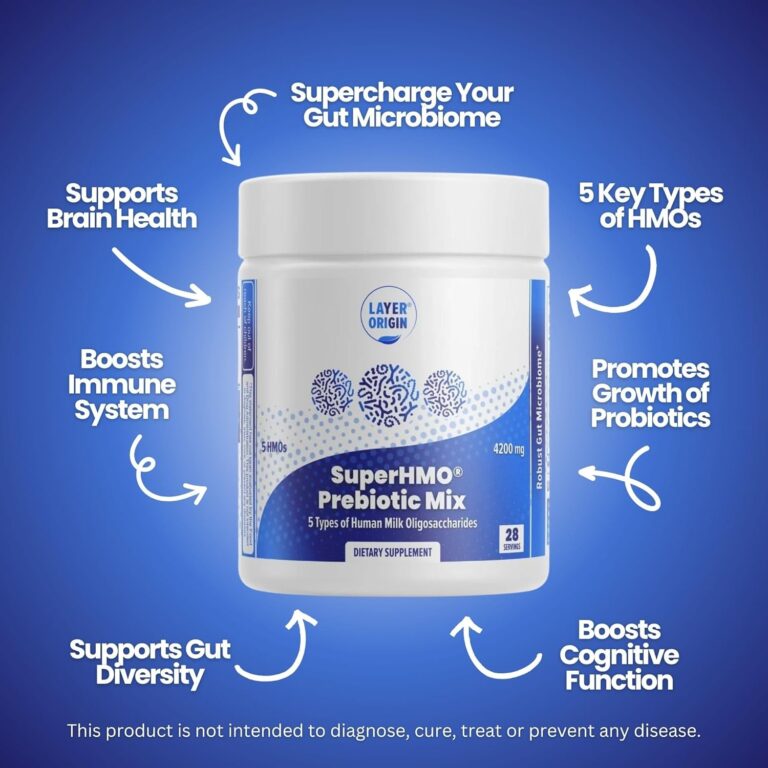
More info:
Milk: a postnatal imprinting system stabilizing FoxP3 expression and regulatory T cell differentiation. Accumulating evidence underlines that milk is a complex signaling and epigenetic imprinting network that promotes stable FoxP3 expression and long-lasting Treg differentiation, crucial postnatal events preventing atopic and autoimmune diseases.
Clin Transl Allergy. 2016 May 12;6:18. doi: 10.1186/
s13601-016-0108-9. eCollection 2016