The Science Behind Breast Milk: Sugars That Program the Immune System
by Mary Ferrari
Human milk oligosaccharides (HMOs) are the third most abundant solid component in human breast milk, following lactose and lipids and they represent one of the most biologically sophisticated elements of early nutrition. Not just simple carbohydrates, HMOs perform a wide range of critical functions that extend far beyond nourishment. They act as powerful prebiotics, selectively stimulating the growth of beneficial gut microbiota such as Bifido bacteria species, which are essential for establishing a healthy intestinal environment in newborns. This early microbial colonization plays a foundational role in shaping immune competence, homeostasis and metabolic health. Later this gives way to a broader population of healthy anaerobic bacteria.
In addition to their prebiotic effects, HMOs exert a protective role against severe neonatal pathologies like necrotizing enterocolitis (NEC), a life-threatening inflammatory condition primarily affecting premature infants. HMOs contribute to this protection by enhancing the integrity of the intestinal barrier and preventing the adhesion of pathogenic bacteria to the gut epithelium. By acting as soluble decoy receptors, they bind harmful microbes and toxins, effectively neutralizing them before they can trigger inflammation or infection.
Even more profound is the ability of HMOs to program the immune system during this critical window of development. Early-life immune education is highly sensitive to environmental inputs, and HMOs guide this process by modulating immune cell responses and promoting tolerance. This immunological programming has long-term effects and is associated with a reduced incidence of allergies and autoimmune diseases later in life. HMOs also play a crucial role in brain development and in the gut barrier’s maturation. Through interactions with gut-associated lymphoid tissue (GALT), HMOs influence the balance between pro-inflammatory and regulatory pathways, fostering a resilient and appropriately calibrated immune system.
HMOs also play a crucial role in brain development. Emerging evidence suggests that these molecules contribute to neurodevelopment. Indirectly, they support the gut-brain axis by shaping the microbiota, which in turn produces metabolites involved in neural signaling and cognitive function. Directly, certain HMOs may be absorbed into systemic circulation and influence brain structure and function, although this remains under active investigation. Along with neurological benefits, HMOs are essential for the maturation of the gut barrier, ensuring proper nutrient absorption while preventing the translocation of toxic substances into the bloodstream.
Breast milk, with its complex and dynamic composition, delivers these benefits in a highly individualized manner. The specific profile of HMOs varies between mothers and across different stages of lactation, reflecting an adaptive system finely tuned to the infant’s needs. This is one of the miracles of human milk: a single class of molecules has such a great impact on the development of the infant.
In this context, the metabolome and metabolomics has emerged as a powerful field of research for advancing our understanding of HMOs and their biological roles. By enabling the comprehensive analysis of metabolites in biological samples, metabolomics provides insights into the functional outcomes of HMO activity. This approach has significant applications in clinical and research settings, allowing for the identification of biomarkers associated with health and disease, as well as the optimization of nutritional interventions.
As research progresses toward a more detailed and comprehensive understanding of HMOs, new opportunities are emerging in the field of neonatal nutrition. One promising direction is the development of targeted supplementation strategies for both breast milk and infant formula. By replicating or enhancing specific HMO profiles, it may become possible to provide each newborn with a more nutritional regimen tailored to their unique physiological needs.
Personalized medicine and personalized nutrition are the keywords driving the application of metabolomics in neonatology for what can be done in the present to protect a newborn particularly in supporting immune development, gut health, and neurodevelopment will affect the future adult as a consequence with profound implications for health outcomes. In this way, HMOs exemplify how early nutritional exposures can shape human health in meaningful and lasting ways.
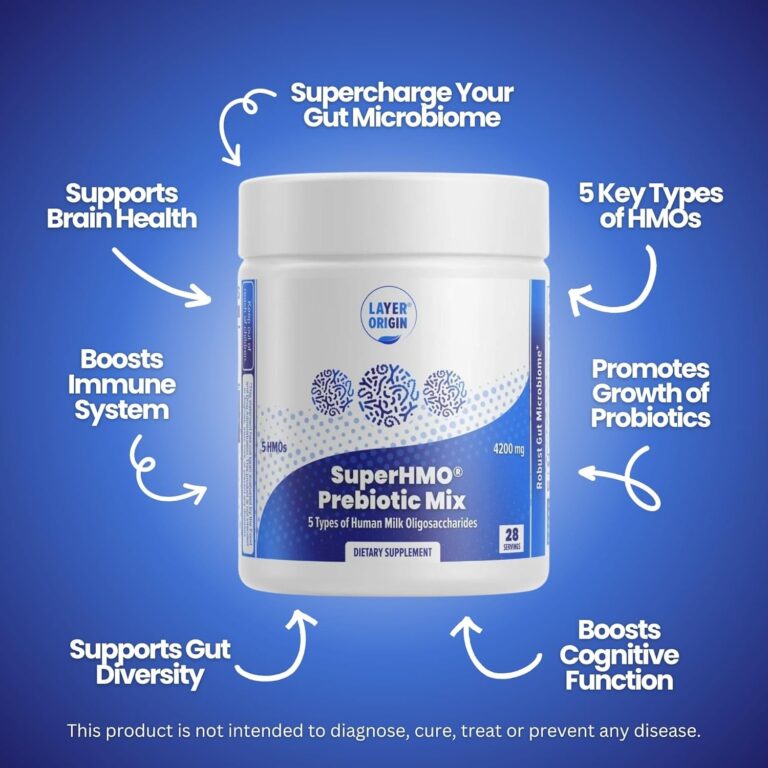
NEW HMO Prebiotics
Bovine colostrum, probiotics, yogurt, kefir and whole fat mammal milk offer superior support to combat dysbiosis. New research on human milk sugars, Human Milk Oligosaccharides (HMO’s) help us understand how these “prebiotics” support a healthy gut and strong immunity, starting from birth. Over 200 HMO’s have been discovered so far.
HMO supplements not derived from human breast milk have recently been developed.
More info:
Milk: a postnatal imprinting system stabilizing FoxP3 expression and regulatory T cell differentiation. Accumulating evidence underlines that milk is a complex signaling and epigenetic imprinting network that promotes stable FoxP3 expression and long-lasting Treg differentiation, crucial postnatal events preventing atopic and autoimmune diseases.
Clin Transl Allergy. 2016 May 12;6:18. doi: 10.1186/
s13601-016-0108-9. eCollection 2016