The Missing Microbe: HMO-Dependent B. infantis Engraftment in Adults
by Mary Ferrari
“The adult microbiome determines the ecological environment, while HMO availability determines whether HMO-dependent B. infantis can maintain its foothold. The 2022 study demonstrated this directly: B. infantis reached high levels in healthy adults without antibiotics, but its engraftment was dependent on continued HMO availability. In parallel, the 2023 HMO study showed that removing HMO did not simply return the adult microbiome to its starting point; instead, a microbial succession followed, including expansion of Bacteroides that persisted through Day 28.”
Dosing a synbiotic of human milk oligosaccharides and B. infantis leads to reversible engraftment in healthy adult microbiomes without antibiotics
- Co-dosing with HMO enables reversible gut engraftment of B. infantis in healthy adults
- The synbiotic is safe and does not require the use of antibiotics for gut engraftment
- Synbiotic induces butyrate production in mice colonized with dysbiotic human microbiota
- In vivo and in vitro models show beneficial impacts on metabolites and enteropathogens
This study in Cell Host and Microbe provides proof-of-concept evidence that Bifidobacterium longum subspecies infantis (B. infantis), an important bacterium of the infant gut, can be introduced into the microbiome of healthy adults and maintained without first using antibiotics. The core idea is the use of a synbiotic: pairing the bacterium with human milk oligosaccharides (HMOs), the specialized carbohydrates naturally abundant in human milk. The researchers reasoned that because B. infantis is uniquely equipped to consume HMOs, providing both together could create a nutritional niche that allows the organism to overcome the colonization resistance of an established adult microbiome. The study is uniquely important because many attempts to introduce beneficial bacteria into adults fail to produce sustained colonization unless the existing microbiome is disrupted.
HMOs are structurally diverse carbohydrates found almost exclusively in human milk, with as many as 200 structures identified. Unlike lactose and other milk nutrients, HMOs are not primarily digested by the infant for energy and instead, they reach the intestine and selectively support particular microorganisms, especially bifidobacteria. B. infantis is particularly well adapted to this environment because its genome contains specialized systems for transporting, binding, and breaking down HMOs. It can use HMOs as a major carbon source and converts them through the bifid shunt into metabolites such as lactate and acetate. These products can then be used by other members of the microbiome, including organisms capable of producing butyrate. In this way, the effect of B. infantis can extend beyond the organism itself and influence the larger microbial community.
The human study enrolled healthy adults who did not have detectable B. infantis before treatment. Participants received B. infantis alone, HMO alone, or combinations of B. infantis with different HMO doses. Importantly, none received antibiotics beforehand. The strongest evidence for actual engraftment came after the bacterial dosing had stopped. When B. infantis was administered without continuing HMO, its abundance rapidly fell toward the detection limit.
When HMO dosing continued, however, B. infantis remained detectable well beyond the period when the bacteria themselves were administered.
At the highest HMO dose, engrafted participants reached an average relative abundance of approximately 5%, with some individuals reaching as high as 25%. The researchers also confirmed viable B. infantis in stool from engrafted subjects.
The study demonstrated an important degree of control. HMO was necessary and sufficient for sustained engraftment under the conditions tested, while stopping HMO resulted in the disappearance of the introduced organism. This makes the relationship different from simply taking a probiotic and hoping that it permanently establishes itself. The researchers also found that successful engraftment produced measurable metabolic changes, including increased lactate. Mouse experiments using human microbiota further demonstrated HMO-dependent engraftment. Interestingly, higher levels of engraftment occurred in microbiomes from infants and from dysbiotic human populations than in healthy adult microbiomes, suggesting that the existing microbial environment influences how easily B. infantis can establish itself.
The researchers also examined what happened when B. infantis and HMO interacted with other microorganisms. In laboratory cultures, the combination increased butyrate production by certain commensal bacteria. Butyrate is an important short-chain fatty acid involved in intestinal metabolism, barrier function, and immune regulation. The combination also inhibited several Enterobacteriaceae organisms, including E. coli, Klebsiella pneumoniae, and Enterobacter cloacae, in vitro. The proposed mechanism involves the production of organic acids and changes to the microbial environment.
This paper presents B. infantis plus HMO as a targeted strategy for altering the adult gut microbiome without antibiotics. The most significant finding is not simply that B. infantis can temporarily appear in adults, but that HMO can provide the specific nutritional support needed for substantial, reversible engraftment. The authors suggest that this approach could eventually be developed into a controllable microbiome therapy. However, the study remains proof-of-concept research, and the human participants were healthy adults. The paper demonstrates the reintroduction of selected functions of the infant microbiome to help reshape the adult microbial ecosystem, rather than a specific attempt to recreate the entire infant microbiome as well as demonstrating long term changes in its proof of concept.
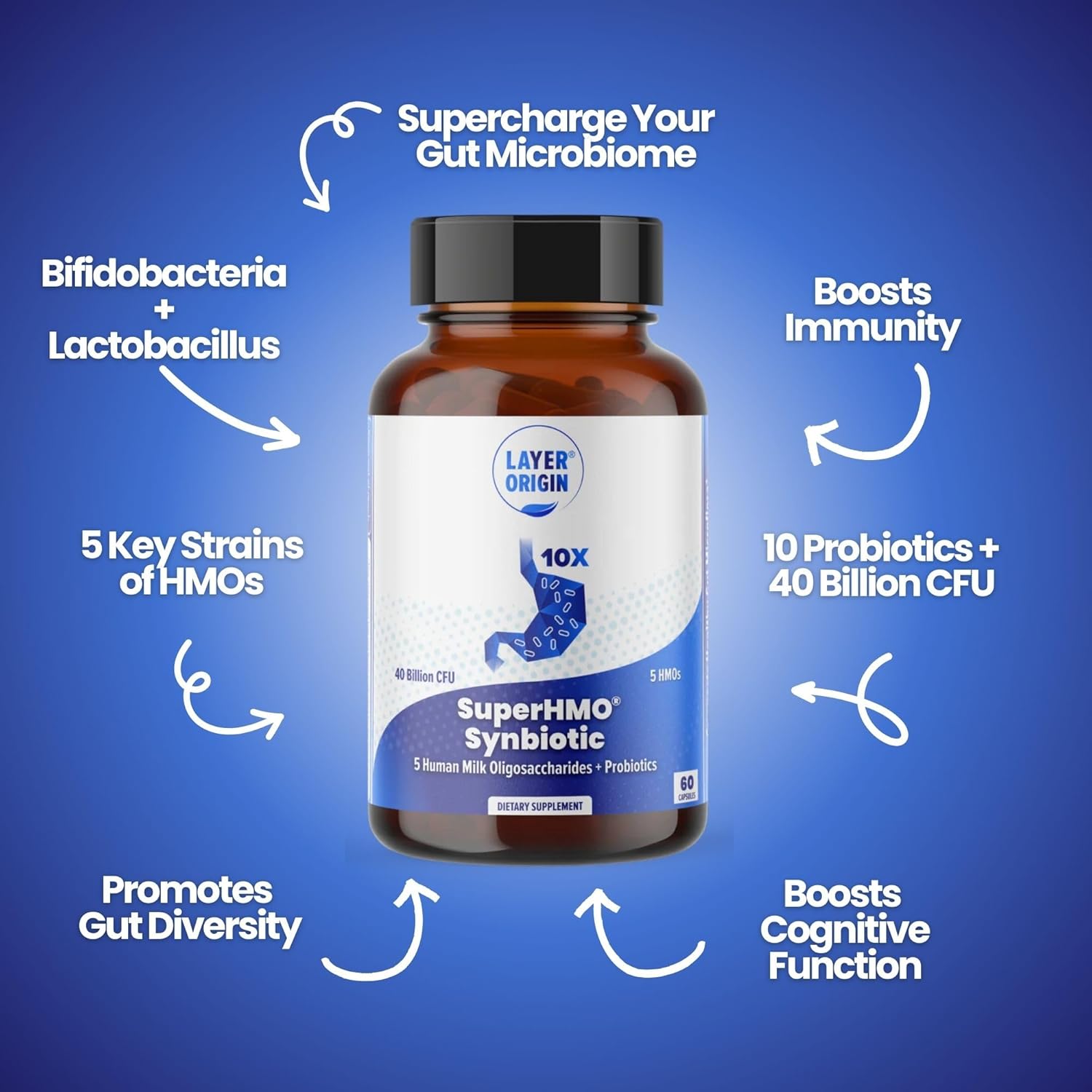
What do actual reviewers who purchased Layer Origin HMO’s say?
From 54 global ratings on Amazon with a 78% five star satisfaction rate, the strongest agreement is noticeable digestive improvement. Several reviewers describe the product as helping digestion, stomach discomfort, or general gut symptoms. One reviewer says they noticed a difference within a day and that it relieved significant stomach pain. Another says it was more helpful than other probiotics they had tried. People specifically like the HMO + probiotic combination. Reviewers seem to understand this isn’t just another probiotic. One reviewer explicitly says they have researched probiotics extensively and considers the combination of HMOs, resistant starch, and probiotics the reason they chose it. Some buyers are unusually knowledgeable about the product and aren’t simply saying “good probiotic.” They’re talking about prebiotics, HMOs, resistant starch, delivery to the intestine, and the relationship between prebiotics and probiotics, suggesting the product attracts consumers who are already actively researching the microbiome. There are reports of benefits continuing beyond simple “regularity” and the reviews aren’t limited to bowel movements. People mention digestion, stomach discomfort, and a general perception that the product is doing something different from ordinary probiotics. One reviewer describes it as the most effective probiotic they’ve tried. One reviewer reported that it worked very well during the first week but then caused substantial bloating and abdominal swelling during the second week, leading them to stop. Reviewers agree they would buy it again, that they had been trying to obtain it when it was out of stock, or that they moved to a subscription so overall, repeat purchasing/subscription interest is a positive signal.
“The authors therefore propose that milk fat is not simply an energy source but may also contribute to the immune environment required for appropriate tolerance development.”
Milk: a postnatal imprinting system stabilizing FoxP3 expression and regulatory T cell differentiation
This review in Clinical and Translational Allergy from 2016 presents the idea that milk is more than a source of calories and nutrients during early life. The authors describe milk as a complex biological signaling system that may help shape the developing immune system, particularly through the formation and stabilization of regulatory T cells, or Tregs. These cells are essential for maintaining immune tolerance and preventing excessive immune responses. A central focus of the paper is FoxP3, a transcription factor that serves as a defining regulator of Treg development and function. According to the authors, several components of milk may work together through metabolic, hormonal, microbial, and epigenetic pathways to support stable FoxP3 expression during the postnatal period.
One pathway involves milk-derived amino acids and nutrient signaling. Certain amino acids can stimulate insulin and insulin-like growth factor-1, which influence the PI3K-Akt pathway. This pathway interacts with FoxO transcription factors that help regulate FoxP3 expression and Treg stability. The authors discuss evidence that excessive nutrient signaling can interfere with this balance. They specifically examine the possibility that the higher protein content of some infant formulas may produce stronger insulin and IGF-1 signaling than breast milk, potentially affecting the metabolic environment in which Tregs develop. The paper presents this as a proposed mechanism rather than a definitive explanation for differences between breastfed and formula-fed infants.
Milk also contains long-chain omega-3 fatty acids that may influence immune regulation. The review discusses evidence that omega-3 fatty acids can affect inflammatory signaling and may promote TGF-β-dependent generation of FoxP3-positive Tregs. These effects are connected to the broader role of fatty acids in regulating cellular signaling pathways. The authors therefore propose that milk fat is not simply an energy source but may also contribute to the immune environment required for appropriate tolerance development.
A particularly important component of the review is its discussion of milk-derived microRNAs and extracellular vesicles called exosomes. Human and bovine milk contain exosomes carrying biologically active molecules, including microRNAs. The authors focus on microRNAs such as miR-148a, miR-29b, and miR-21, which can influence DNA methyltransferases. Because stable FoxP3 expression is associated with demethylation of regulatory regions within the FOXP3 gene, the authors propose that milk-derived microRNAs may help establish an epigenetic environment favorable to Treg stability. The review also discusses TGF-β carried in milk exosomes. TGF-β activates SMAD2 and SMAD3 signaling, which can promote FoxP3 transcription and the differentiation of inducible Tregs.
The microbial component of milk is another major theme. Human milk can contain bifidobacteria and lactobacilli, and the authors review evidence that these organisms can influence immune regulation through IL-10, TGF-β, and FoxP3. Bifidobacterium species are particularly relevant because they can interact with the developing intestinal immune system while HMOs provide selective nutrients that support their growth. This creates a potential connection between milk components, the infant microbiome, and Treg development.
The review ultimately presents these mechanisms as an interconnected network rather than isolated effects. Nutrients influence cellular signaling, milk exosomes provide microRNAs and TGF-β, and milk-associated bacteria interact with the intestinal immune system. Together, these factors may encourage stable FoxP3 expression and Treg differentiation during a period when the newborn immune system is learning to distinguish harmless environmental and dietary antigens from genuine threats. The authors emphasize that insufficient Treg maturation has been associated with allergic disease and autoimmunity.
Importantly, this paper is a mechanistic review rather than a clinical trial demonstrating that a particular milk component prevents disease. Some of the pathways discussed are supported by animal, cellular, observational, or translational evidence, and the authors acknowledge that the relative importance of the individual milk components remains uncertain. Its major contribution is therefore a framework for understanding lactation as an immune-developmental system in which nutrition, microbiota, signaling molecules, and epigenetic regulation interact to influence Treg development and immune tolerance.
*Bovine colostrum is the least processed dairy milk with the greatest benefits and lowest risk in those who do not have established tolerance (non breast fed), including increase in beneficial bacteria like bifido. It dissolves in regular pasteurized whole fat mammal milk or yogurt (not UHT, not organic). The combination is duration dependent and relies on periodic and continued maintenance until human follow up trials show otherwise. While both bovine colostrum and whole fat mammal milk serve as prebiotics to increase beneficial organisms as well as drastically improving gut and immune health this differs from ‘engraftment’ and a long term resident shift in the gut eco system. BMO’s differ from HMO’s and are low quantity. Natural oral immune therapy also differs from proper gut and development requiring initial bifido colonization and an eventual microbial shift to healthy adult microbiota that occurs in breast fed infants. Functional HMO dairy products are in proof of concept development. Only HMO inclusion infant formulas may provide similar benefits.
About FMT’s and LBP’s
As described in Cell and Host, dysbiosis of the human gut microbiome has been associated with infectious, autoimmune, and metabolic diseases. Emerging microbiome therapies attempt to correct these disturbances by changing the composition or activity of microbial communities, often through the introduction of specific microorganisms known as live biotherapeutic products (LBPs). One of the best-known approaches is fecal microbiota transplantation, in which microbiota from a healthy donor are introduced into the gastrointestinal tract of a patient. Efficacy has been attributed to “engraftment” of LBP component strains, which is defined as durable persistence in the recipient microbiome. However, the abundance required for efficacy and determinants of successful engraftment are not well defined and may be a function of numerous factors including donor and recipient microbiome composition, host inflammatory status, diet, and genetics. Its effectiveness against recurrent Clostridioides difficile infection has been associated with the successful engraftment of donor organisms, meaning that introduced strains persist within the recipient’s microbiome rather than simply passing through the gastrointestinal tract.
Antibiotic treatment has sometimes been used before microbiota-based therapies because disrupting the existing microbiome can reduce colonization resistance and create ecological space for introduced organisms. However, antibiotics can also reduce microbial diversity and produce unwanted changes in the microbiome.
This creates a fundamental challenge: how can a desired microorganism be established without first destroying the existing microbial community?
A different strategy is the use of a prebiotic. Rather than broadly disrupting the microbiome, a prebiotic provides a nutrient that can be preferentially utilized by the microorganism being introduced or expanded. The underlying principle is that supplying the right nutrient can give a target organism a competitive advantage within an otherwise resistant microbial ecosystem. However, this approach has an important limitation: the organism of interest must already be present, and the existing microbiome must be capable of supporting its expansion.
This distinction becomes particularly important in adults. Successful microbial engraftment is not simply a matter of changing the adult diet.
It depends on the interaction between the microorganism being introduced, the nutrient supplied to it, and the existing microbiome. The adult diet does not automatically determine whether a specific organism can establish itself.
The microbial ecosystem determines whether the organism has an ecological opportunity to persist.
The Bifidobacterium longum subsp. infantis (B. infantis) study provides an important proof of concept for this principle. Instead of using antibiotics to clear the adult microbiome, researchers supplied B. infantis together with human milk oligosaccharides (HMOs), the specialized carbohydrates naturally abundant in human milk. The combination created a nutrient environment that favored B. infantis and allowed it to expand within healthy adult microbiomes. Most importantly, this occurred without antibiotic pretreatment.
The findings point toward three essential components for successful B. infantis engraftment: the right microorganism, the specific nutrient it can utilize, and a microbiome capable of providing the ecological conditions needed for that organism to establish.
The HMO did not function simply as another dietary fiber.
This changes how adult microbiome restoration can be viewed. Rather than assuming that changing the overall diet will automatically rebuild a missing organism, the evidence suggests a more precise model: microbiota determine the ecological opportunity, the microorganism provides the desired function, and the appropriate nutrient supports its expansion.
Human milk oligosaccharides modulate the intestinal microbiome of healthy adults
This 2023 study in Scientific Reports examined whether human milk oligosaccharides (HMOs), which are best known for shaping the infant microbiome, can also produce measurable changes in the gut microbiome of healthy adults. Human milk contains more than 200 structurally diverse HMOs, and these compounds help establish the distinctive microbial environment of the breastfed infant. The researchers wanted to determine whether a complex mixture of HMOs could similarly influence adult intestinal bacteria. Thirty-two healthy adults received an HMO concentrate derived from pooled donor human milk for seven days, followed by 21 days of monitoring. Multiple methods were used to examine the response, including 16S rRNA sequencing, shotgun metagenomics, metabolomics, and measurements of circulating cytokines.
The intervention produced a clear, dose-dependent expansion of Bifidobacterium. At the two highest doses, the average proportion of Bifidobacterium increased from approximately 3% at baseline to 13% after seven days, with one participant reaching 33%. Several species responded, including B. adolescentis, B. longum, B. bifidum, B. catenulatum, and B. pseudocatenulatum. This finding is significant because it demonstrates that healthy adults retain bacterial populations capable of responding rapidly to HMO exposure. The effect was not limited to a single bacterial strain, although Bifidobacterium represented the most prominent response.
The researchers also observed broader ecological changes. Microbial diversity decreased during the seven-day HMO treatment, while the overall composition of the microbiome shifted substantially. Several organisms declined, including members of the Firmicutes and Bacteroidetes groups, while certain other organisms increased. After HMO administration stopped, Bifidobacterium returned toward baseline, but the microbiome did not simply return immediately to its original state. Instead, a microbial succession occurred, with members of the Bacteroides, Parabacteroides, and Prevotella genera becoming more prominent. Some of these changes remained detectable through day 28.
The study also examined microbial function rather than simply measuring which bacteria were present. Shotgun metagenomic analysis showed changes in bacterial gene content and functional pathways. In addition, the researchers found evidence that HMO treatment altered circulating metabolites. Levels of the immune-regulatory molecules TGF-β and IL-10 also increased during the study period. These findings are important because they suggest that HMO exposure can affect not only microbial composition but also microbial activity and host-associated biology.
Laboratory experiments provided additional evidence that the effects were directly related to microbial utilization of HMOs. When adult fecal microbiota were cultured with the HMO concentrate, dose-dependent changes in bacterial composition occurred, along with evidence of fermentation and short-chain fatty acid production. Interestingly, individual HMOs or a defined mixture containing the ten most abundant HMOs did not reproduce the full effect of the complex donor-derived preparation. This suggests that the biological activity of HMOs may depend partly on their structural diversity and on interactions among many less abundant HMO molecules.
The study also provides an important comparison with conventional prebiotics. The authors found that inulin could stimulate Bifidobacterium in some adult cultures, but its effects varied according to the microbial community. In contrast, the HMO preparation produced a more focused response dominated by Bifidobacterium. This difference may be important because a prebiotic consumed by many organisms can produce broader and less predictable ecological effects.
The authors emphasize that this was a small pilot study involving healthy adults, so the findings cannot be directly extended to people with chronic disease, children, or older adults. There was also no placebo group, and the HMO concentrate contained components other than HMOs that may have contributed to some effects. Nevertheless, the study demonstrates that complex HMOs can directly and measurably reshape the adult intestinal microbiome. Taken together with the B. infantis study, it provides evidence for a potentially important concept: HMOs can act as selective ecological signals in the adult gut, while their combination with an HMO-specialized organism such as B. infantis may provide a more targeted means of changing microbial composition and metabolism.
Source:
2022
2016
2023
Human milk oligosaccharides modulate the intestinal microbiome of healthy adults
2021
2019
The largest reservoir of microbes exists in the distal gastrointestinal tract, both in the lumen, where microbes facilitate primary and secondary metabolism, and on mucosal surfaces, where they interact with host immune cell populations. While local microbial-driven immunomodulation in the gut is well described, more recent studies have demonstrated a role for the gut microbiome in influencing remote organs and mucosal and hematopoietic immune function. Unsurprisingly, therefore, perturbation to the composition and function of the gut microbiota has been associated with chronic diseases ranging from gastrointestinal inflammatory and metabolic conditions to neurological, cardiovascular, and respiratory illnesses. Considerable effort is currently focused on understanding the natural history of microbiome development in humans in the context of health outcomes, in parallel with improving our knowledge of microbiome-host molecular interactions. These efforts ultimately aim to develop effective approaches to rehabilitate perturbed human microbial ecosystems as a means to restore health or prevent disease. This review details the role of the gut microbiome in modulating host health with a focus on immunomodulation and discusses strategies for manipulating the gut microbiome for the management or prevention of chronic inflammatory conditions.
The gut microbiome: Relationships with disease and opportunities for therapy
2023
This systematic review provides an overview of the evidence for the health effects of HMO supplementation in humans based on clinical trials. The number of clinical trials involving HMO supplementation has increased greatly in the last few years and has resulted in diverse study designs. The clinical trials discussed here varied in terms of the HMO structures tested, the doses, the food matrices, the age and health of the enrollees, and the duration of the study. All clinical trials have confirmed the safety and tolerability of HMO supplementation in all study populations. Most studies also reported indications for health benefits associated with HMO intake. In infants, clinical outcomes such as the gut microbiome composition, stool characteristics, and immune responses were shifted towards those of breastfed infants. The ability of HMOs to modulate the gut microbiome was also evident in children and adults, although the clinical relevance is still unclear. Further evidence from well-designed clinical trials and preclinical experiments is required to substantiate the evidence for health benefits in different populations.
Overview of Human Studies
- Scope of Research: Systematic reviews of clinical trials identify dozens of published studies evaluating oral supplementation of manufactured HMOs in infants, children, and adults.
- Commonly Tested Structures: The most widely evaluated bio-identical HMOs include individual or blended structures such as 2′-fucosyllactose (2′-FL), 3-fucosyllactose (3-FL), lacto-N-tetraose (LNT), lacto-N-neotetraose (LNnT), and sialylated oligosaccharides (3′-SL and 6′-SL).
- Delivery Methods: Interventions are typically administered via fortified infant formula, nutritional drinks, or dietary supplements at doses ranging from 0.2 g/L to 20 g/day.
Findings and Safety
- Safety and Tolerability: Human clinical trials consistently demonstrate that manufactured, bio-identical HMOs are safe and well-tolerated across diverse populations, including preterm infants, healthy term infants, children, and adults.
- Infant Microbiome and Immunity: In infants, supplementation shifts the gut microbiome profile closer to that of exclusively breastfed infants, showing increased abundance of Bifidobacterium, softer stool consistency, and reductions in certain infections and antibiotic usage.
- Adult and Non-Infant Studies: Adult trials have explored benefits for gut comfort (such as managing irritable bowel syndrome symptoms), immune modulation, and general microbiome composition.
Source:
2025
2022
Biology of human milk oligosaccharides: From basic science to clinical evidence
Layer Origins
"Feel better almost immediately I have dysbiosis that has led to SIBO, systemic inflammation, dermatological and joint related issues. On bad flares I get intense joint inflammation and pain to the point of feeling as if I’ve had arthritis for fifty years. Taking this product for just two or three days reverses the inflammation to where I honestly can’t even feel it and my SIBO gas is reduced significantly. This stuff does not make me feel bloated and I can barely tell it is in my shaker" J.